

Mortgage Matters
Understanding escrow
How your escrow account works.
Are you experiencing a change in the amount of your monthly mortgage payments and trying to find out why? It’s more than likely an update to your escrow account. But what does that mean, and why is it happening?
What is escrow?
Escrow is an essential part of homeownership that helps manage property-related expenses. In a basic sense, escrow is a financial arrangement where a third party holds and manages funds on behalf of two other parties in a transaction. For instance, some of the money you put aside for your downpayment may have been held in an escrow account before closing on your home.
When it comes to mortgages, an escrow account holds funds for things like property taxes and insurance premiums. Each month, a portion of your mortgage payment goes into this escrow account, and when your property tax and/or insurance bills come due, your mortgage lender pays these balances on your behalf using your escrow account.
What is escrow analysis?
Your escrow account is reviewed annually to make sure the amount you are contributing each month is enough to cover fluctuations in property taxes and insurance premiums, as these numbers can change year over year. Escrow analysis helps determine any adjustment to the escrow portion of your monthly payment for the coming year.
During an escrow analysis, your mortgage lender:
- Reviews your account history.
- Examines projected expenses for the upcoming year.
- Calculates whether your current payments are adequate.
- Determines if there's a surplus or shortage in your account.
Based on this analysis, your monthly escrow payment may increase, decrease, or stay the same in the rare instance there are no changes to escrowed payments.
Key terms in escrow analysis
Escrow Surplus: A surplus occurs if your account has more funds than necessary at the time of your annual escrow analysis. Depending on the amount of your surplus, you may receive a refund or credit.
Escrow Shortage: If your account has insufficient funds to cover projected expenses, your monthly payment may increase to make up the difference, or you may have the option to make a lump sum payment to account for the shortage.
Minimum Balance or Cushion: Lenders often require a minimum balance in your escrow account as a cushion to help offset unexpected increases in taxes or insurance.
How often is an escrow analysis performed?
How often is an escrow analysis performed?
There is a required minimum of one escrow analysis each year. You may request additional analyses if there are changes that may impact these balances.
What causes escrow payments to change?
What causes escrow payments to change?
Changes in property taxes, insurance premiums, or the removal of private mortgage insurance can affect your escrow payments.
What if there's a shortage in my escrow account?
What if there's a shortage in my escrow account?
If there's a shortage, your lender will usually increase your monthly payment to make up the difference over the next 12 months, otherwise you may have an option to make a lump sum payment to minimize the change to your monthly payment.
What happens if there's a surplus in my escrow account?
What happens if there's a surplus in my escrow account?
Depending on the amount of the surplus, you may receive either a refund check or a credit to your account. The smaller the amount, the more likely it is to be issued as an account credit.
How to read your annual escrow account disclosure statement.
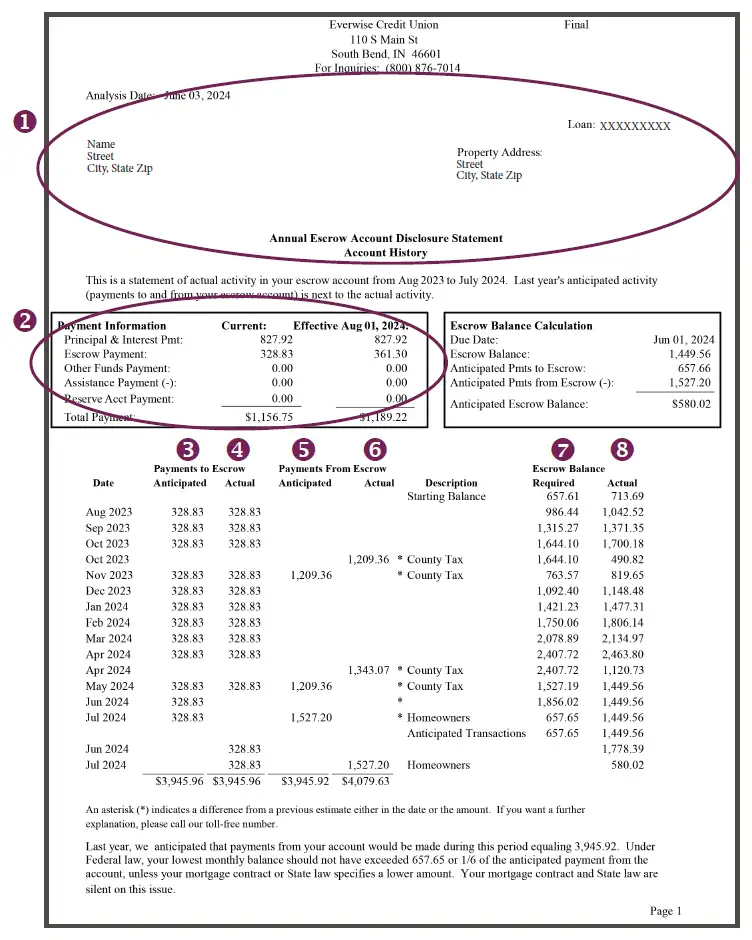
Page 1
- Account information and date of the escrow analysis
- Breakdown of the payment amounts and the effective date of your new payment
- Projected deposits into the escrow account
- Actual deposits made into the escrow account
- Projected disbursements to be made from the escrow account.
- Actual disbursements made from the escrow account and what the payment was for
- Projected monthly balance of the escrow account after deposits and disbursements
- Actual escrow balance after all deposits and disbursements in the given month
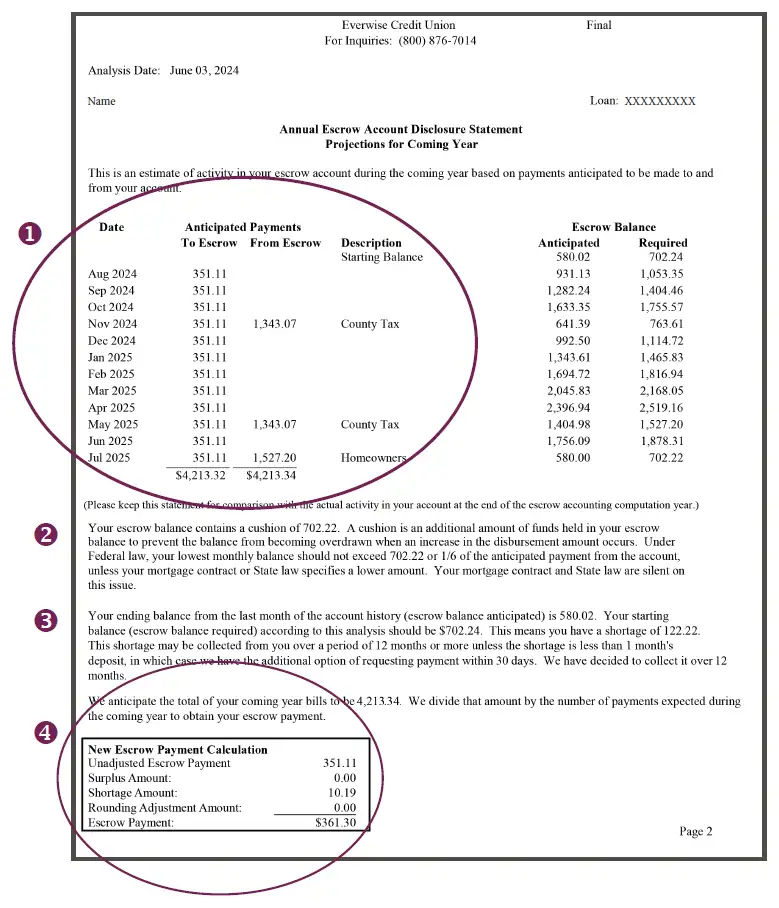
Page 2
- A projection for the coming year based on existing premium invoice amounts
- Your cushion, a required dollar amount that remains in the escrow account to offset unanticipated increases property tax or insurance premiums (cannot exceed 1/6th of the total paid out of the escrow account annually)
- Shortage surplus (the difference between the lowest anticipated escrow balance versus the required cushion lowest balance)
- Breakdown of how the new escrow portion of the payment is calculated to account for changes and surplus/shortages
Subject to membership eligibility requirements. Loans subject to credit approval. Borrower must be a resident of Indiana or Michigan, and for home loans property must be in Indiana or Michigan. All credit union programs, rates, terms, and conditions may change without notice.